








Earn {{points}} for every {{amount}} you spend and turn them into discounts at checkout.
Join now
What a Kelp Forest Does While We’re on the Beach
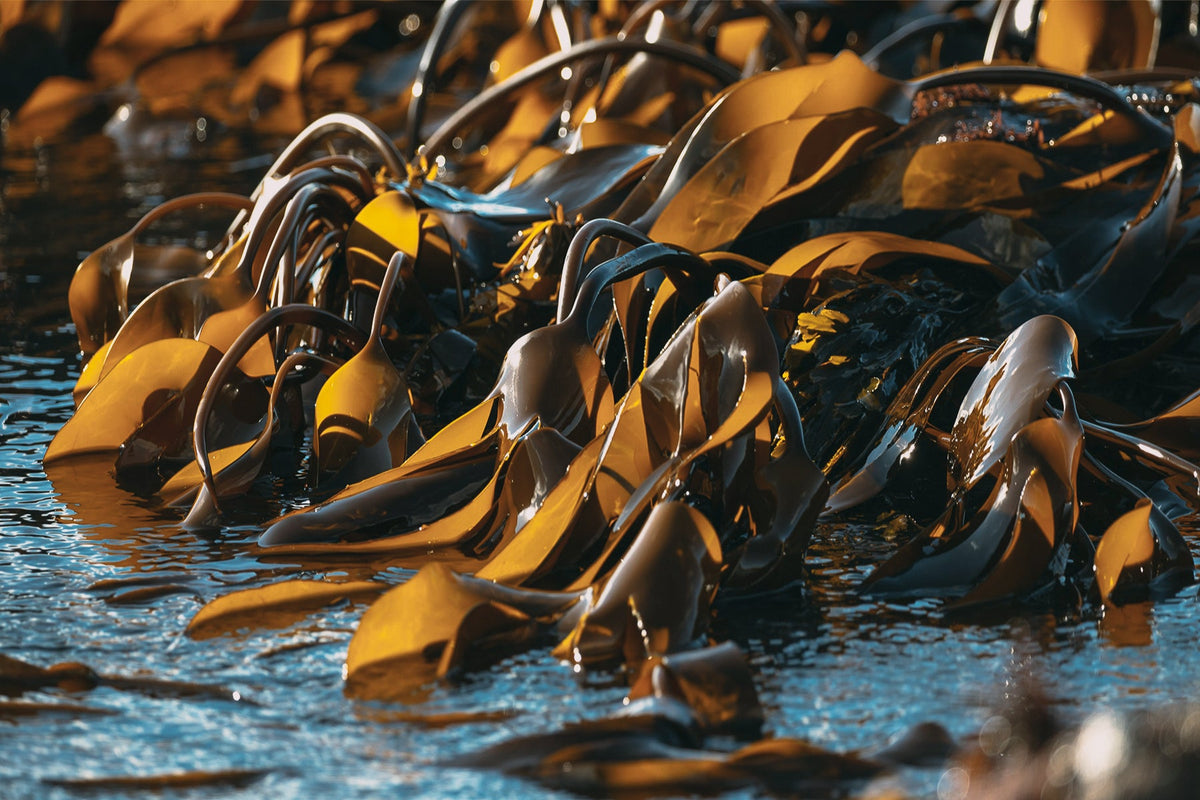
By the time you’ve shaken the sand out of your shoes, the kelp offshore has spent the afternoon doing something remarkable. It’s been turning sunlight and dissolved carbon into living tissue. What you are seeing is the greenhouse gas, CO2 that was once in the atmosphere and in dissolved form in the water, now locked away in the form of kelp.
Some of that carbon takes a long journey. Fragments break loose and drift away. Some feed animals or break down, recycling their carbon. A fraction can reach deep water, where the carbon may stay out of contact with the atmosphere for a very long time – this is known as the ‘kelp carbon-conveyor’. The reduced CO2 in seawater also reduces ocean acidification. That’s how kelp forests help slow climate change. How much they contribute depends on where the carbon ends up and how long it stays there.
Kelp also takes up dissolved nutrients such as nitrate as it grows. That can help improve water quality locally, particularly where excess nutrients fuel blooms of other algae. The scale of the benefit depends on how much kelp is growing and how quickly tides and currents replace the water.
Then there’s the shade. A dense canopy cuts the light reaching the seabed and changes how water moves and mixes. Those effects help keep pockets of water much cooler in some settings. Whether they do depends on depth, tides and the weather. It’s one of the questions that interests me most. What does a stretch of coast feel like to a fish just a few centimetres long? A patch of shade and a break from the current could make the next hour a little easier, particularly in the face of climate change.
Leave a comment
This site is protected by hCaptcha and the hCaptcha Privacy Policy and Terms of Service apply.